Library
Newsletters·substack.com·Jun 22, 2026·19 min read

Knowledge Agents: Beat Frontier Models with Better Structure

James Wang introduces "knowledge agents" as a method to significantly enhance AI model performance for specialized and proprietary knowledge, often allowing smaller, locally-run models to match or exceed large frontier models. This is achieved by injecting highly structured, domain-specific information through embeddings, organized concept and thesis documents, and multi-pass search strategies. The approach effectively bridges modern LLMs with the precision of knowledge-based AI, solving challenges like hallucination and irrelevant information. This structure-first methodology provides expert-level answers for complex queries that even large frontier models struggle with alone.

From the source

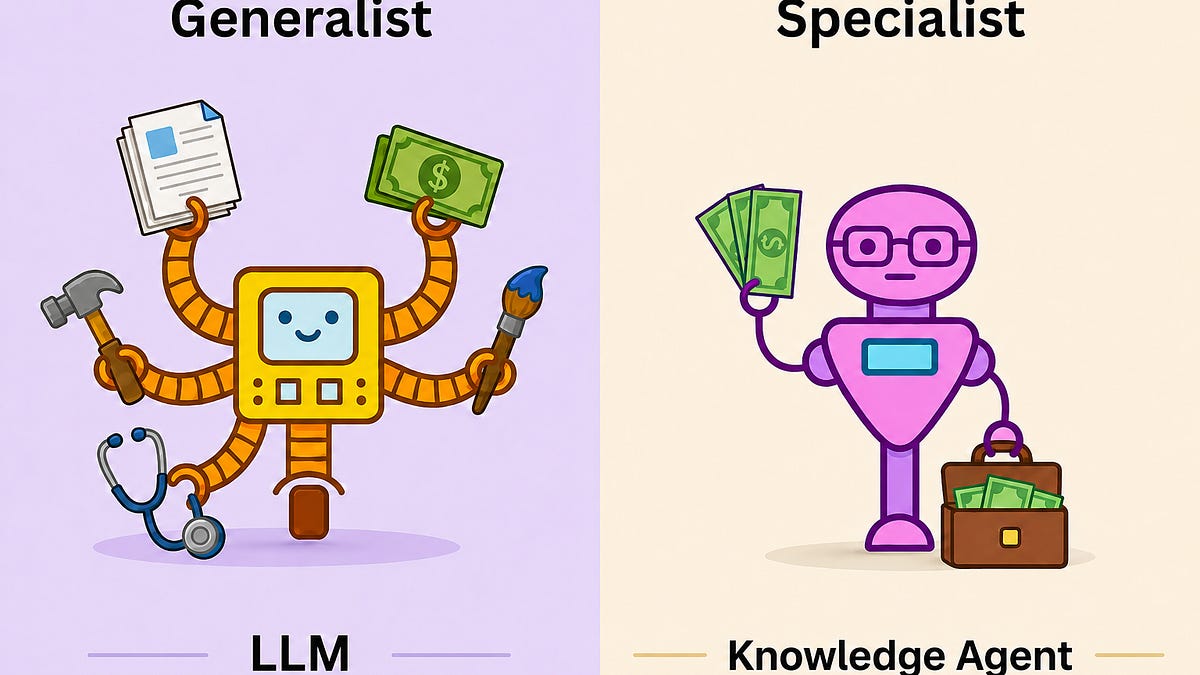
While Mythos was a step up from Opus, I’ve been actively moving smaller in terms of my agentic models—and matching the quality of output of some of the largest frontier models. The use cases have spanned from hard “hedge fund level” (for want of a better description) market analysis, financial management, and AI personal assistants to even helping a few friends in difficult medical situations. I’ve called this pattern “knowledge agents” with a generic template available to everyone here. They literally inject the right knowledge into the AI agent plugged into it. Anyone can do this, with or without my template.

David's Archive

One person's reading, compressed into a queryable knowledge base. Built with retrieval, evals, and a learning loop — and instrumented end to end.

Explore

Project

© 2026 David's Archive · answers cite their sources · Admin sign-in