Ponytail is a GitHub project designed to make AI agents adopt the mindset of a "lazy senior dev," drastically reducing the amount of code they generate. It works by implementing an "always-on" ruleset and a decision-making ladder that prompts the AI to prioritize existing solutions (stdlib, native features, dependencies) and only write new code as a last resort, focusing on necessity over verbosity. This approach reportedly leads to significantly less code, faster execution, and lower costs across various AI platforms, all while maintaining crucial aspects like security, validation, and accessibility.
Capture your insights from this source.
This video from Sequoia Capital presents the insights and lessons David Senra acquired from his extensive study of over 400 founders. It aims to distill key patterns and principles observed in their entrepreneurial journeys, providing valuable wisdom for aspiring and current business leaders.
Saved from youtube.com. Add your notes and tags to curate this source.
Chris Miller provides an explanation of semiconductors in a video running approximately 16 minutes. This educational content is presented on the Big Think Clips channel, aiming to elucidate the topic for viewers. The segment likely serves as an accessible introduction to understanding the fundamentals of semiconductors.
SVPG (Silicon Valley Product Group) is a partnership of industry veterans focused on teaching the "product operating model," a methodology used by top tech companies to build successful, tech-powered products. They provide workshops, masterclasses, coaching, and content to help organizations transform their product development processes and improve outcomes, especially in the context of Generative AI. Their teachings emphasize distinguishing between product discovery (building to learn) and product delivery (building to earn).
This article defines product sense as the learned ability to cut through complexity and identify the most critical user needs, dispelling the myth that it's an innate intuition. It highlights product sense as essential for founders and product managers to bridge strategy with execution, anticipate market shifts, strengthen product-market fit, and excel in hiring. The guide details practical methods for cultivating this skill, including deep user immersion, critical product analysis, embracing constraints, and continuous learning through frameworks and feedback.
The article explores the ongoing debate between HTML and Markdown as output formats for AI agents, arguing that the optimal choice depends on the audience. Markdown, while cheaper and machine-readable for agent-to-agent communication, contributes to human information overload due to its lack of visual density. HTML, despite higher token costs and security challenges, excels in human-facing interactions by providing rich, interactive, and visually dense outputs that aid comprehension. Major enterprise AI platforms are increasingly adopting HTML or similar structured UI components for human-consumable agent outputs, signaling a shift towards formats that balance efficiency with human understanding.
This comprehensive guide defines user interviews as a key qualitative research method for understanding users' behaviors, motivations, and pain points to inform product development. It highlights benefits such as uncovering unmet needs and enhancing usability, while also addressing limitations like the discrepancy between stated intentions and actual behavior. The article distinguishes user from customer interviews, details various interview types, and provides a step-by-step process for conducting effective sessions, from defining objectives to synthesizing insights.
Stanford CS153 Frontier Systems lecture featuring Ben Horowitz from a16z. The session specifically covers venture capital systems as a core topic. Additionally, the lecture delves into the significant role of network effects.
Bill Gurley's "Runnin' Down a Dream" is a guide for individuals seeking to find profound fulfillment and avoid regret in their professional lives. The book distills a decade of research into six actionable principles designed to help readers identify and thrive in a career they genuinely love. It serves as a practical playbook, encouraging a new generation to step off the conventional career path and pursue a purpose-filled life where happiness and success are not mutually exclusive.
Channel firewalker presents a YouTube video titled "Richard Feynman. Why." The video's description reiterates this title, indicating a focus on Richard Feynman and an exploration of the question "Why." Based solely on the provided information, the specific content or argument beyond this central theme remains undescribed.
Andrej Karpathy is featured, sharing his perspective encapsulated by the statement, 'We’re summoning ghosts, not building animals.' This content is presented on the Dwarkesh Patel channel. The specific context or elaboration on this provocative analogy is not detailed in the available description.
This YouTube video from the Feynman Archives explores how to emulate the thinking processes of the renowned physicist Richard Feynman. It aims to provide insights and techniques to help viewers cultivate a genius-level mindset. The content, as suggested by the title, focuses on methods to 'force your brain to think like a genius' inspired by Feynman's unique approach to problem-solving and understanding.
Paperclip is an open-source, self-hosted Node.js and React application designed to orchestrate and manage teams of AI agents as if they were a company. It acts as a control plane for defining business goals, hiring diverse agents, enforcing budgets, and ensuring governance through features like organizational charts, task management, and audit logs. The platform enables users to build and monitor autonomous AI companies, addressing common challenges such as agent coordination, cost control, and maintaining persistent task context across various agent types.
A light-weight and powerful meta-prompting, context engineering and spec-driven development system for Claude Code by TÂCHES. - gsd-build/get-shit-done
Enjoy the videos and music you love, upload original content, and share it all with friends, family, and the world on YouTube.
Musings of a Computer Scientist.
This guide provides a comprehensive overview for building custom skills for Claude, which are packaged instructions that teach Claude specific, repeatable tasks and workflows, thereby customizing its behavior for consistent results. It details the required file structure (SKILL.md, scripts, references), core design principles like progressive disclosure, and emphasizes planning with concrete use cases and defining success criteria. The article covers critical aspects of YAML frontmatter, writing effective instructions, and rigorous testing methods including triggering, functional, and performance comparison tests. Skills are particularly powerful for automating document creation, complex workflows, or enhancing existing MCP integrations by embedding best practices.
This content features Oxford's Nick Bostrom discussing his perspective on artificial intelligence and reality. Bostrom posits that AI is likely to become Earth's dominant mind. The conversation also explores the philosophical concept of the simulation hypothesis, questioning whether our fundamental reality might be an artificial construct.
Open weights AI models are crucial for maintaining price competition against dominant frontier AI labs, preventing an oligopoly from extracting excessive consumer surplus by acting as a "generic" alternative. However, their availability is quietly eroding due to tightening license conditions and companies ceasing releases of new models. This trend threatens to consolidate market power among a few major players, leading to significant economic implications as they could capture the vast consumer surplus generated by AI.
Agentic workflows that run on every pull request can quietly accumulate large API bills. Here’s how we found inefficiencies and built agents to fix them.
Reid Hoffman advises recent graduates to embrace the AI era by "AI-optimizing" their careers rather than merely "AI-proofing" them. He suggests mastering AI literacy, understanding its impact on workflows, and developing strong personal intention to create opportunities through experimentation and building. Graduates should also prioritize fostering personal relationships, which remain invaluable in an automated world, to actively shape their futures with AI rather than being defined by it.
This podcast episode unpacks the profound impact of advanced generative AI tools, like ChatGPT Images 2.0, on creative work, visual communication, and societal habits. It explores the global debate around AI as a fundamentally human challenge, emphasizing the critical need for active steering to mitigate risks such as isolation and misinformation. The discussion also highlights a significant economic shift from selling software to delivering outcomes, with major implications for jobs, entreprene
AI agents are transforming product management by automating routine tasks, enabling product managers to focus on strategic planning and high-level decision-making. This guide introduces two agent-native skills from the "compound engineering" plugin: `ce:strategy` for defining a comprehensive product strategy through an interactive interview, and `ce:product-pulse` for on-demand, automated reporting of key metrics, system health, and follow-up insights.
The EveryInc/compound-engineering-plugin introduces the "Compound Engineering" methodology, which aims to make each unit of engineering work easier by reducing technical debt and codifying knowledge. It inverts traditional development by focusing heavily on thorough planning and review (80%) before execution (20%).
Replit enables rapid app development and deployment by turning ideas into functional prototypes and production-ready code in minutes, often without coding. The platform offers visual design capabilities, parallel task execution, multi-artifact creation, and intelligent team collaboration, all supported by zero-setup full-stack infrastructure and integrations.
This GitHub repository provides a comprehensive curated list of "Claude Skills," which are specialized, reusable folders containing instructions, scripts, and resources for customizing Claude AI workflows, particularly Claude Code. Skills function via a progressive disclosure architecture, loading only metadata initially for efficiency, and are dynamically discovered by Claude for relevant tasks. The resource details skill creation, installation via web, CLI, or API, showcases numerous official examples.
Lokin is an AI networking platform designed for university students to connect with peers and form startup teams. It enables students to gain hands-on experience by building, shipping, and managing real-world projects with built-in tools for tasks and roadmaps. The platform helps students create portfolio-ready outcomes and accelerate their career development beyond traditional academic coursework or internships.
This article outlines five golden rules for "agent-first" product engineering, advocating for building products where AI agents are treated as a primary interaction surface rather than an afterthought. Key principles include enabling agents to perform all user actions, exposing product functionality at an agent's natural level of abstraction (e.g., SQL), and front-loading universal context specific to the product.
Facing obsolescence from quartz movements, Japanese competition, and currency shifts, the Swiss watch industry dramatically transformed from precision instrument makers to luxury brand peddlers. This involved prioritizing distinctive, often inconvenient, design and heavy brand advertising over traditional engineering excellence like accuracy and thinness. The article argues this transformation is a perfect case study for "the brand age," where brand becomes paramount as technological advancement.
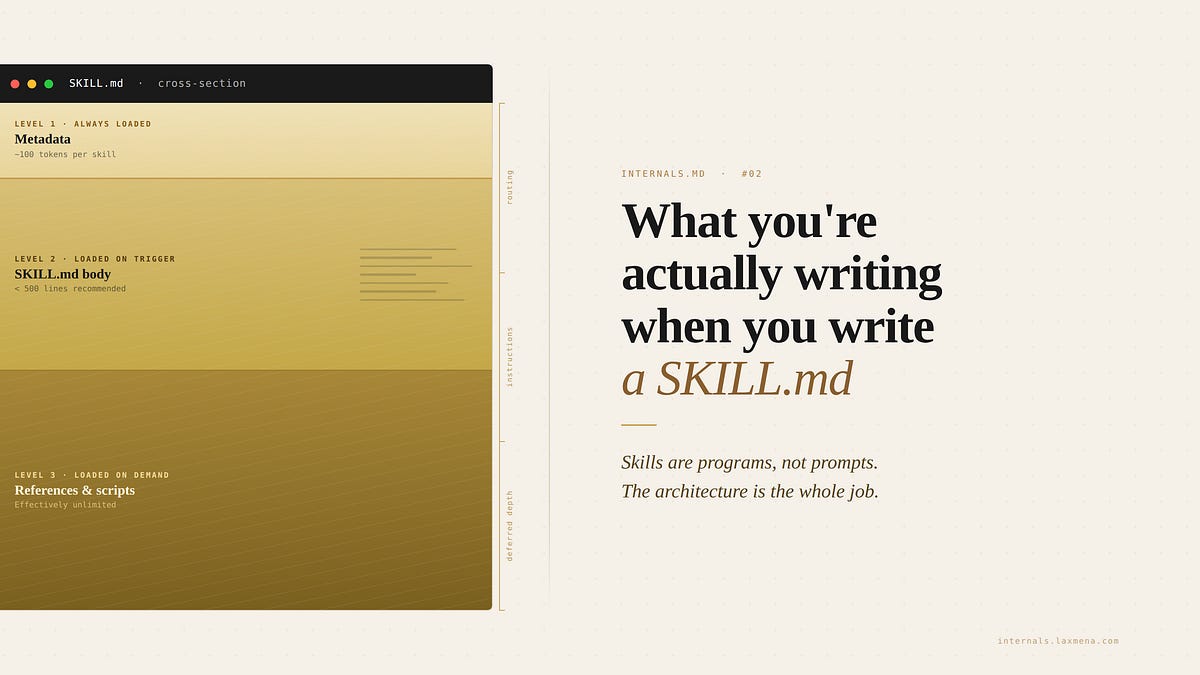
Skills for AI agents are loader specifications, not merely long prompts, operating on a principle of progressive disclosure with three distinct loading levels to manage context window cost. Understanding this architecture is crucial, as content placement directly impacts efficiency and prevents common antipatterns like monolithic skills or mismanaged metadata. Proper skill design optimizes context usage, improves portability, and ensures consistent performance, especially when dealing with envir
Key Actionable Guidance (produce in NotebookLM) To build effective skills without wasting context or causing silent failures, the author recommends the following: Structure for Progressive Disclosure: Organize your skill into three distinct levels based on when the agent needs them. Level 1 (Metadata): Use YAML frontmatter strictly for the name and description. This is always loaded and tells the agent when to trigger the skill. Level 2 (SKILL.md body): Keep this to core procedural instructions (ideally under 500 lines) that load only when the skill is invoked. Level 3 (References and Scripts): Put large maps, long examples, or executable code in separate files that the main skill can point to. These are loaded purely on demand. Remove Frontmatter from Reference Files: Never put YAML metadata on your reference files. Doing so pushes them into the always-loaded memory, cluttering the routing system and causing the agent to trigger sub-instructions without their parent context. Break Up Monolithic Files: Do not dump all your instructions into a single SKILL.md. Moving granular details into reference files can drastically cut down how much context the skill consumes on every turn (in the author's case, dropping usage from 20% to 7%). Make File Paths Discoverable: Do not hardcode specific directories (like modules/web), because the skill will break when shared with teammates who use different repository structures. Instead, instruct the agent to actively discover the correct paths (e.g., by searching for a package.json file). Maintain a "Gotchas" Section: AI agents operate on reasonable default assumptions that might not match your specific setup. Explicitly document your environment's unique quirks—such as needing to run a build command from the root directory—in a single, heavily maintained "Gotchas" section so the agent doesn't make incorrect assumptions. Test with a "Golden Set" of Evals: Never assume that upgrading to a smarter AI model will yield better results; more capable models often interpret instructions differently rather than following them literally. Maintain a small suite of realistic test prompts (evals) to measure output quality every time you edit the skill or upgrade the underlying model.
The "LLM Wiki" proposes a pattern for building persistent knowledge bases where an LLM incrementally creates and maintains a structured, interlinked wiki of markdown files from raw sources. This approach differs from typical RAG by having the LLM perform all the "bookkeeping"—summarizing, cross-referencing, and updating—allowing knowledge to compound and stay current, rather than being re-derived on every query. The system consists of immutable raw sources, the LLM-maintained wiki, and a guiding
This GitHub repository provides a `CLAUDE.md` file that outlines four key principles—"Think Before Coding," "Simplicity First," "Surgical Changes," and "Goal-Driven Execution"—to enhance Claude's code generation behavior. Derived from Andrej Karpathy's insights into common LLM coding pitfalls, these guidelines aim to reduce errors like making wrong assumptions, overcomplicating code, and unintended side effects. The core approach emphasizes transforming imperative coding tasks into verifiable go
AI agent skill that researches any topic across Reddit, X, YouTube, HN, Polymarket, and the web - then synthesizes a grounded summary - mvanhorn/last30days-skill
YepAPI offers over 110 free AI agent skills designed to enhance various AI coding platforms, including Cursor and Claude Code. These readily available configurations, provided in formats like Claude Code and AGENTS.md, allow users to copy-paste rules and patterns directly into their projects. The skills cover a broad range of topics from frameworks like Next.js and React to SEO, UI/UX, and data, enabling developers to build smarter and more specialized AI agents.
This article outlines best practices for creating effective Skills that Claude can discover and utilize successfully. It guides users on how to author these skills to ensure optimal functionality and integration within the Claude ecosystem.
A collection of details that make your interfaces feel better.
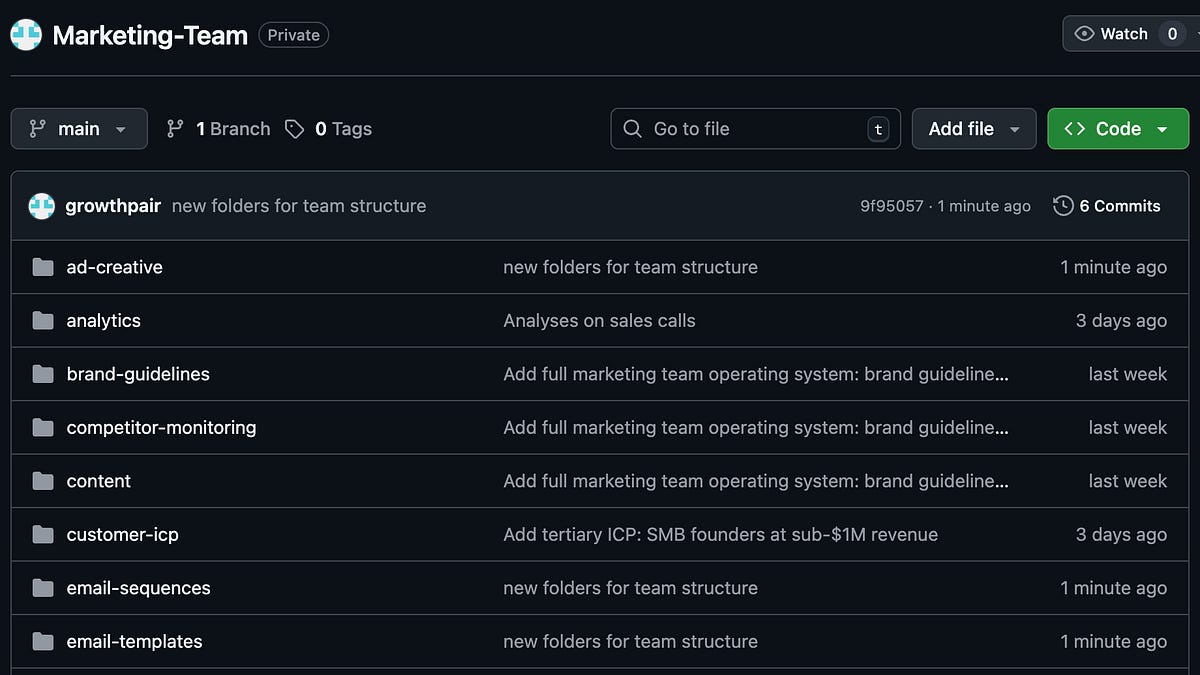
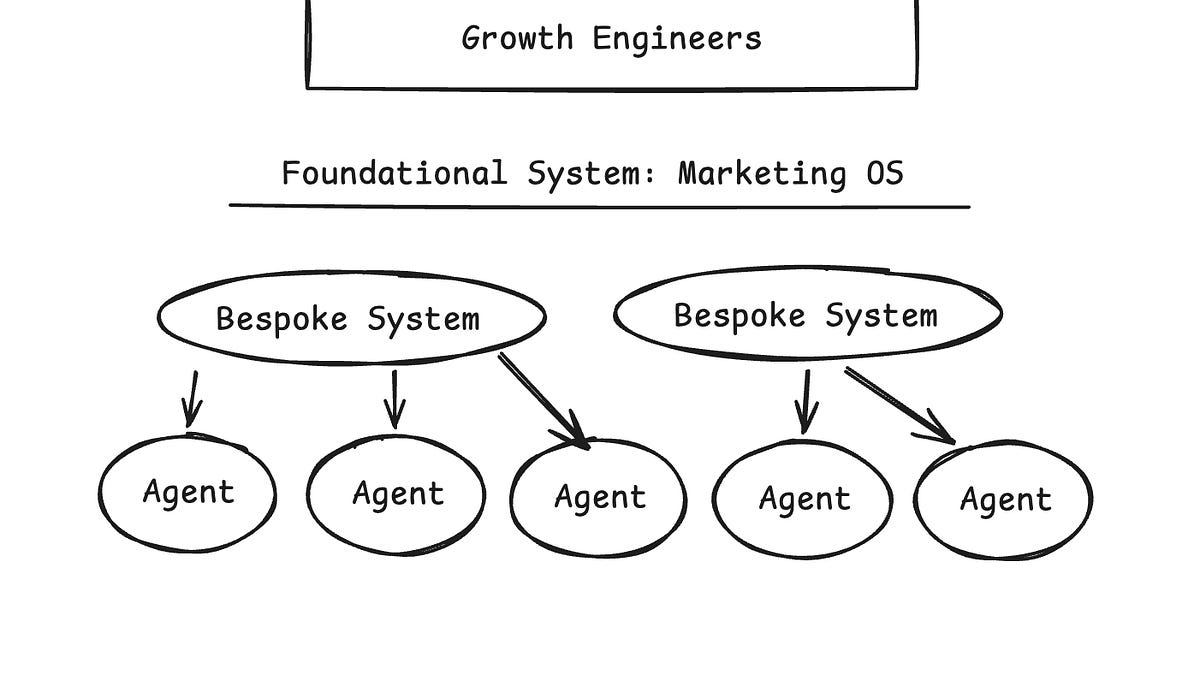
The article posits that future marketing teams will adopt GitHub as their primary operational hub, centralizing information and workflows. The author draws on past experience with early Postmates growth teams, noting the excessive number of disparate tools used to manage marketing data. This suggests a growing need for a more unified and collaborative platform to streamline marketing operations, akin to how developers use GitHub.
This article, by Jonathan Martinez, is presented as 'part 2' of a series building on the concept that 'Growth Engineer is the new Growth Marketer.' It aims to provide insight into the daily life and responsibilities of someone in this evolving role. The piece intends to illustrate the practical application of growth engineering principles, though the full content detailing a typical day is not provided in the saved information.
The `ml-intern` project by Hugging Face is an open-source initiative designed to function as an AI-powered machine learning engineer. It aims to automate key stages of the ML lifecycle, specifically by reading research papers, training models, and facilitating the deployment of machine learning models. This project offers a comprehensive solution for automating various ML development and operational tasks.
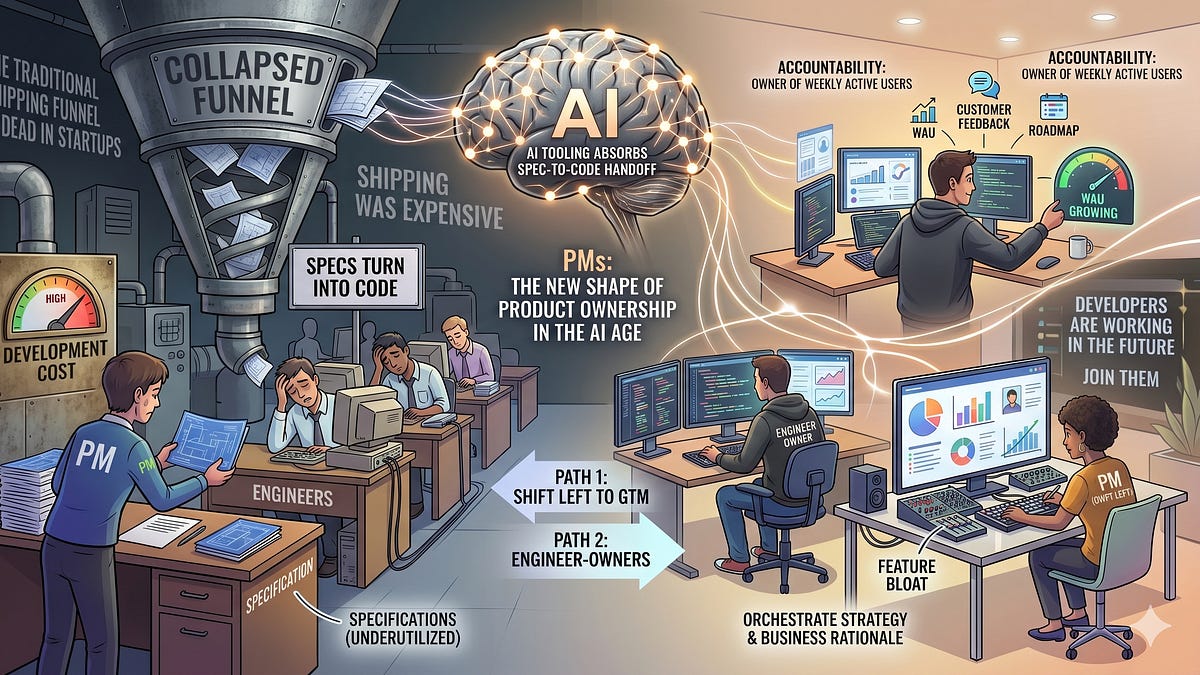
This article delves into the future evolution of Product Managers, presenting insights specifically from professionals deeply immersed in agentic engineering. It offers a unique perspective on how the PM role might transform and adapt within this rapidly advancing technological domain.
MIT Technology Review serves as a publication dedicated to delivering news and insights on a broad spectrum of emerging technologies. Its editorial focus includes critical advancements in fields such as Artificial Intelligence, Climate Change, and Biotechnology. The platform aims to keep its audience informed about the cutting-edge developments that are shaping the future of innovation.
TLDR is a free daily newsletter that curates interesting stories from the world of startups, technology, and programming. Analyzing the content's asset preloads, it covers diverse topics including artificial intelligence, UI/UX design, software engineering best practices, mobile technology, and cybersecurity. This newsletter aims to provide concise updates across a broad spectrum of tech-related fields.
The article investigates whether AI code editors genuinely improve developer performance by soliciting feedback from PostHog's product engineers. While some engineers found features like autocomplete beneficial, the overall sentiment regarding the tools' effectiveness was mixed. The piece aims to highlight potential pitfalls or areas where AI assistance might not always lead to better outcomes.
This article emphasizes that the quality of `AGENTS.md` files is crucial for the effectiveness of AI models within a software development context. A well-written `AGENTS.md` acts as a significant enhancement, effectively upgrading the AI model's capabilities. Conversely, poor or absent `AGENTS.md` documentation can be more detrimental than having no documentation at all, underlining its critical role in AI agent performance. This suggests that precise and effective documentation is vital for opt
This Google ML Crash Course module introduces foundational concepts for understanding Large Language Models. It defines language models as systems predicting token probabilities within a sequence, crucial for tasks like text generation and translation. The course explains N-gram models and Recurrent Neural Networks, detailing their context-gathering mechanisms and inherent limitations.
Bigram --> N-Gram where N=2. two words consecutively after eachother paired together. N-gram --> ordered sequence of N words. order matters. Natural Language Understanding models use N-gram to predict the next word in a sequence of words. Language Model --> any model that estimates or predicts the next token in a sequence of tokens. LLM --> any transformer based language model, or a language model with a very high number of parameters (weights and biases model learns from during training)
The MindStudio blog provides practical guides, tutorials, and real-world examples for building and optimizing AI agents and workflows. It features insights into multi-agent orchestration, cost-efficient model deployment, and leveraging enterprise AI infrastructure for faster application development. The articles also cover crucial industry trends, security and compliance issues, and comparisons of leading AI models and platforms like Claude, GPT, and DeepSeek.
This article introduces Andrej Karpathy's LLM Wiki, a system designed to transform raw documents into a structured markdown knowledge base. This personal knowledge base can be efficiently queried using Claude's capabilities. The guide provides practical instructions on setting up this system quickly, specifically highlighting its integration with Obsidian in just five minutes.
Markdown .md file can open in any operating system or any editor. Frontier LLM models are trained on loads of markdown content like GitHub READMEs and documentation sites. Claude interprets markdown format as structure, not just a bunch of stitched together text. Because .md requires structure, it forces notes and information to have a higher level of organization, which is more organized than most peoples knowledge systems. The structure creates clarity.
The article argues we are in the "third era of AI" where generalists, not engineers, are critical for success, emphasizing the need for "agentic deployment experts." This role involves identifying, deploying, training, and measuring the ROI of commercial AI agents and tools within an organization, akin to implementing any enterprise software. Companies and individuals who proactively embrace and implement AI tools will thrive, while those who wait or lack urgency will face rapid decline.
Garry Tan's gstack is an open-source framework comprising 23 AI specialist tools designed to turn Claude Code (and other AI agents) into a virtual engineering team, covering roles like CEO, Designer, Eng Manager, and QA. It significantly boosts individual developer productivity, enabling one person to ship products at a pace comparable to a large team, by integrating AI throughout the entire software development sprint lifecycle. The framework provides interconnected slash commands for planning,
# 🚀 The Ultimate gstack Reference Guide **Goal:** Move from "vibe coding" (prompting) to "high-resolution engineering" (shipping quality). --- ## 1. The Core Philosophy: The Sprint Loop Effective use of `gstack` requires following a linear path. Don't jump to coding immediately. Follow the **Think → Plan → Build → Review → Test → Ship** sequence. --- ## 2. Command Reference (The "Skills") ### 🧠 Phase 1: Strategic Planning (The "Think" Phase) * **/office-hours**: **(Start Here)** Interrogates your idea. It asks "6 forcing questions" to find the simplest version (the "narrowest wedge") of your feature. * **/plan-ceo-review**: Audits the "Design Doc" created in office hours. Focuses on product taste, user value, and scope creep. * **/autoplan**: The "Master" command. It runs the CEO, Design, and Engineering reviews automatically to build a 10/10 implementation plan. ### 🏗️ Phase 2: Technical Architecture (The "Plan" Phase) * **/plan-eng-review**: Your CTO. It creates ASCII diagrams, defines database schemas, identifies edge cases, and writes a "Test Plan" before a single line of code is written. * **/design-consultation**: Researches existing design systems and creates a `DESIGN.md` for your project's visual identity. ### 🛠️ Phase 3: Execution & Safety (The "Build" Phase) * **/freeze**: Locks the AI to a specific folder. Use this to prevent the AI from making "drive-by" edits to parts of your code that already work. * **/guard**: Activates maximum safety (Freeze + Careful mode). Prevents destructive commands like `rm -rf` or `force-push`. ### 🛡️ Phase 4: Quality Control (The "Review" Phase) * **/review**: Your Senior Dev. It audits the code you just wrote for "AI Slop" (verbose/redundant code), security holes (OWASP/STRIDE), and logic bugs. * **/cso**: Runs a dedicated **Chief Security Officer** audit specifically looking for vulnerabilities. * **/design-review**: Uses a real browser to take screenshots of your UI and critiques the typography, spacing, and UX. ### 🧪 Phase 5: Verification (The "Test" Phase) * **/qa [URL]**: Launches a headless browser (Playwright) to click through your site. It verifies that your features actually work in a real browser environment. * **/qa-only**: Runs the testing suite without trying to fix the code, giving you a pure report of what's broken. ### 🚢 Phase 6: Delivery (The "Ship" Phase) * **/ship**: Cleans up your messy "WIP" git commits, runs final tests, and prepares a professional Pull Request. --- ## 3. The "Garry Tan" Effective Workflow To get the most out of gstack, follow this exact recipe for every new feature: 1. **Start with `/office-hours`**: Never code until you've been interrogated. 2. **Run `/autoplan`**: Let the AI "debate itself" (CEO vs. Engineer) to find the best path. 3. **Execute the Plan**: Use Cursor or Claude Code to build. 4. **Audit with `/review`**: Catch the bugs you missed while vibe-coding. 5. **Verify with `/qa`**: Ensure the UI didn't break on different screen sizes. 6. **Finalize with `/ship`**: Keep your git history clean. --- ## 4. Advanced "Power User" Tools * **Continuous Checkpoint Mode**: Set `gstack-config set checkpoint_mode continuous`. This auto-commits your work as you go. If the AI crashes, you can run `/context-restore` to pick up exactly where you left off. * **The Confusion Protocol**: If the AI starts "guessing" (e.g., "I think the API works like this..."), stop it immediately. Use `/careful` and force it to read the documentation using `/browse`. * **GStack Browser**: Use `/open-gstack-browser` to launch a custom Chrome instance that can pass cookies, CSS changes, and screenshots directly back to Claude Code. --- ## 5. Maintenance Commands * **/gstack-upgrade**: Syncs your local skills with the latest improvements from the GitHub repo. * **/learn**: Manages the "Memory" of your project. It exports project-specific patterns so the AI gets smarter about your codebase over time. --- ### Cheat Sheet: Which command do I use? * **"I have a cool idea"** → `/office-hours` * **"Check my logic"** → `/review` * **"Something is broken"** → `/investigate` * **"Is the UI pretty?"** → `/design-review` * **"Ready to go live"** → `/ship`
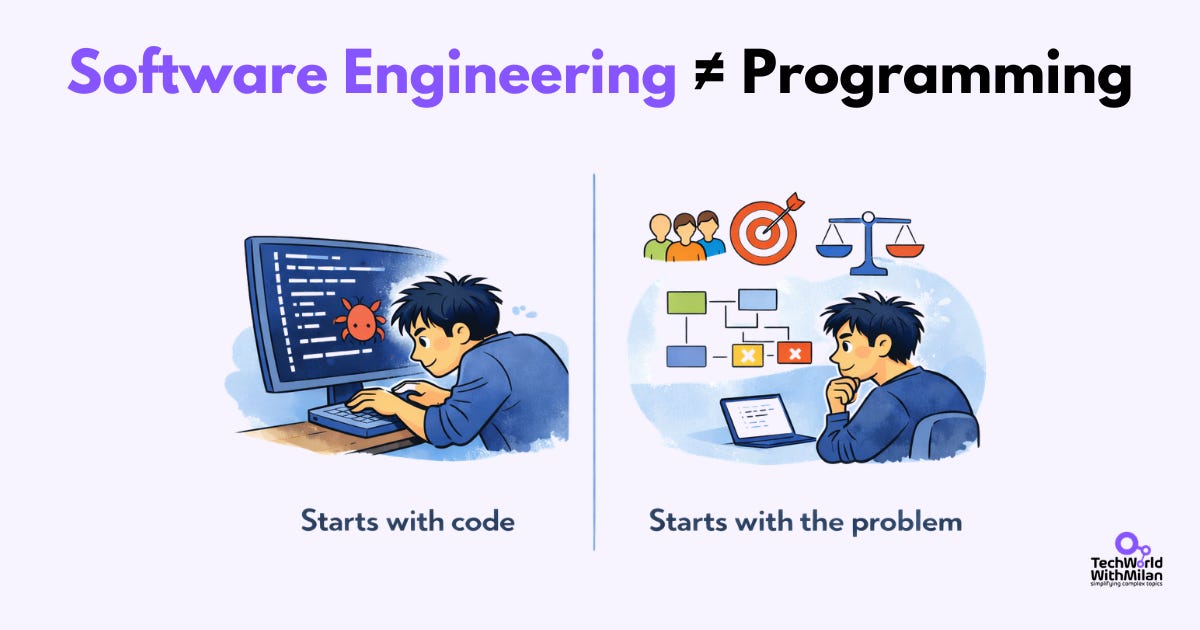
The article posits that software engineers are primarily compensated for efficiently solving problems, rather than simply writing lines of code. It highlights a common pitfall in engineering organizations where individuals instinctively jump into coding immediately upon encountering a problem. This approach, the author suggests, often bypasses essential analysis and strategic thinking, leading to potentially less efficient solutions.
notes testing 123
Exa is a real-time AI search engine and web search API designed to retrieve current data from the web for AI applications. It provides functionalities like web crawling, a SERP API, and deep research tools. The platform is built for querying, crawling, and extracting structured content and live data from websites.
David Shatsky's portfolio website.
The a16z Show · Episode
Paul Graham's extensive essay collection offers deep insights into startup culture, technology, and entrepreneurship, often drawing from his experiences with Y Combinator. Beyond practical advice for founders and engineers, the essays explore the nature of great work, effective thinking, and the challenges of creating new things. Graham also delves into broader societal observations and personal philosophy, encouraging readers to question conventions and pursue impactful projects. This archive s
Stitch is an AI-powered tool developed by Google that specializes in generating user interfaces for both mobile and web applications. Its primary purpose is to make design ideation fast and easy.